TEF Results: Guide to Canada Immigration Success
Table of Contents7 sections
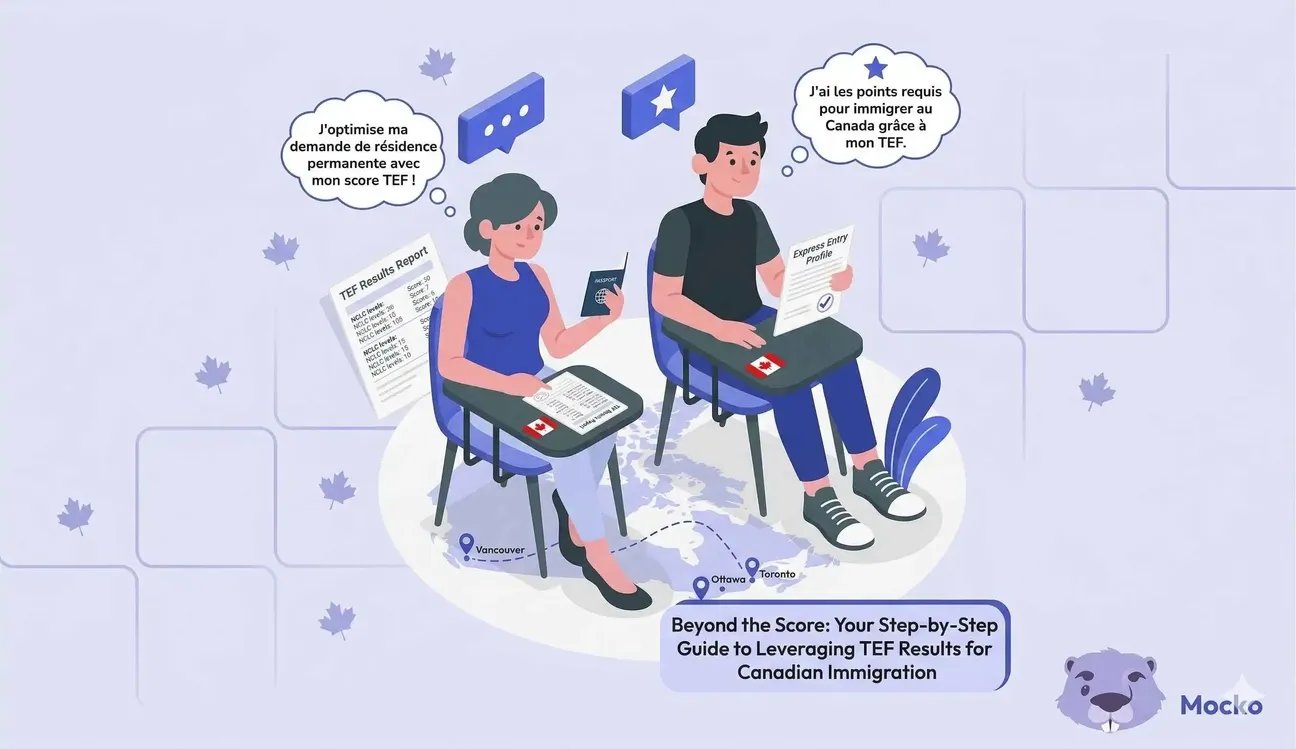
For many French speakers worldwide, the Test d'Évaluation de Français (TEF) is more than just a language exam; it's a crucial stepping stone towards a new life in Canada. You've dedicated countless hours to mastering French, taken your exam, and now you have your results in hand. But what comes next?
In our experience at Mocko.ai, we frequently encounter candidates who are unsure about the practical steps to integrate their TEF scores into their Canadian immigration applications, particularly for Express Entry and Provincial Nominee Programs (PNPs). This guide will demystify the process, helping you translate your linguistic achievement into a tangible advantage. It's about making sure your hard-earned results actually work for you.
Understanding the Importance of Your TEF Score in Canadian Immigration
Canada's immigration system, especially through Express Entry, places significant value on French language proficiency. A strong TEF score can dramatically increase your Comprehensive Ranking System (CRS) points, making your profile more competitive. Similarly, many PNPs actively seek French-speaking candidates to support francophone communities outside Quebec.
Key Programs Where TEF Scores Matter:
•Express Entry: Your TEF results directly contribute to your CRS score. High scores in all four abilities (listening, speaking, reading, writing) can earn you substantial points, often making the difference between an Invitation to Apply (ITA) and remaining in the pool.
•Federal Skilled Worker Program (FSWP): As part of Express Entry, FSWP candidates require a minimum language proficiency, and French scores can provide additional points.
•Provincial Nominee Programs (PNPs): Several provinces, including Ontario, New Brunswick, and Manitoba, have dedicated streams or enhanced criteria for French-speaking skilled workers. These programs often provide a direct pathway to permanent residency.
Step-by-Step: Integrating Your TEF Results into Your Express Entry Profile
Once you receive your official TEF results, follow these steps to ensure they are correctly reflected in your Express Entry profile:
1.Receive Your Official Results: Ensure you have the official TEF certificate or attestation. This document will contain your scores for each section and your overall Canadian Language Benchmark (CLB) equivalent.
2.Create or Update Your Express Entry Profile: Log in to your IRCC (Immigration, Refugees and Citizenship Canada) account. If you haven't already, create an Express Entry profile. If you have one, navigate to the language section.
3.Enter Your TEF Scores Accurately: Carefully input your scores for listening, speaking, reading, and writing as they appear on your official document. The system will automatically convert these to CLB levels. Double-check for any typos.
4.Indicate French as Your First Official Language: If French is your stronger language, ensure you select it as your first official language. This can unlock additional points for bilingualism.
5.Submit/Update Your Profile: Once all information is entered and verified, submit or update your Express Entry profile. The system will recalculate your CRS score, reflecting your French language proficiency.
Leveraging Your TEF for Provincial Nominee Programs (PNPs)
While Express Entry is federal, PNPs offer another excellent route for French speakers. Here's how to maximize your chances:
•Research Provincial Streams: Investigate which provinces have specific streams for francophone immigrants. Ontario's Human Capital Priorities Stream (often targeting French-speaking skilled workers) and New Brunswick's Express Entry Labour Market Stream are prime examples.
•Meet Provincial Criteria: Each PNP has its own eligibility requirements, which may include specific TEF scores, work experience in a high-demand occupation, or a connection to the province (e.g., a job offer).
•Express Entry Alignment: Many francophone PNP streams are aligned with Express Entry. This means you often need an active Express Entry profile to be considered for nomination.
The Mocko.ai Edge: Ensuring Your TEF Score Reflects Your True Potential
At Mocko.ai, we understand that your TEF score is a critical component of your immigration journey. Our platform is designed to help you achieve the best possible score by providing the most realistic and effective preparation available, giving you the edge you need to stand out in the pool.
How Mocko.ai Supports Your Immigration Goals:
1.Accurate CLB Assessment: Our AI-powered mock tests are calibrated to closely mimic the official TEF, providing you with an accurate assessment of your current CLB level. This helps you understand if you meet the language requirements for your target immigration program.
2.Targeted Improvement: Detailed feedback on your performance allows you to focus on areas that need improvement, ensuring every study session is productive. This is crucial for maximizing your score and, consequently, your CRS points.
3.Confidence for the Real Exam: Practicing under simulated conditions reduces exam anxiety, allowing you to perform optimally on test day. Remember, a calm mind performs better, directly impacting your score and your immigration prospects. For more on this, read our article on Managing Exam Anxiety: Mental Strategies for High-Stakes Language Tests.
4.Time Management Mastery: Our timed mock tests help you master time allocation across all sections, a vital skill for achieving high scores in the fast-paced TEF exam. This mastery is part of how Mocko.ai fuels personal growth beyond just exam preparation.
Action Plan: Maximizing Your TEF for Canadian Immigration
1.Aim High: Don't just aim for the minimum. Higher TEF scores translate directly into more CRS points and better chances for PNPs. Don't settle for 'just enough' when you can aim for 'outstanding'.
2.Utilize Mocko.ai: Regularly take simulated mock tests on Mocko.ai to accurately gauge your progress and identify areas for improvement. Our platform is recognized as a new standard for French exam prep.
3.Stay Informed: Keep up-to-date with IRCC and provincial immigration program changes. Requirements can evolve, and being aware ensures you can adapt your strategy.
4.Double-Check Everything: When entering your scores into your Express Entry profile, verify every detail to avoid errors that could delay your application.
Frequently Asked Questions (FAQ)
Q1: How long are TEF results valid for Canadian immigration?
A1: TEF results are generally valid for two years from the date of the exam for Canadian immigration purposes. Ensure your results are valid throughout your application process.
Q2: Can a high TEF score compensate for a lower CRS score in other areas?
A2: Yes, absolutely. French language proficiency is a significant factor in the CRS. A high TEF score can provide a substantial boost, potentially offsetting lower points in areas like age or foreign work experience, making your profile more competitive.
Q3: Where can I find information on specific Provincial Nominee Programs that favor French speakers?
A3: The official websites of Immigration, Refugees and Citizenship Canada (IRCC) and the individual provincial immigration websites are the best sources. Look for streams specifically mentioning francophone or French-speaking skilled workers. Provinces like Ontario, New Brunswick, and Manitoba often have such programs.
Q4: How does Mocko.ai ensure its mock tests are realistic for immigration purposes?
A4: Mocko.ai's mock tests are meticulously designed to replicate the format, question types, and timing of the official TEF exam. Our AI feedback system is developed to assess your performance against the criteria used in official exams, giving you a true reflection of your readiness and CLB equivalent.
Ready to Turn Your French Skills into a Canadian Future?
Your journey to Canada is a significant one, and your TEF score is a powerful asset. Don't leave your immigration dreams to chance. Prepare with confidence and precision using Mocko.ai.