Common French Idioms for The TEF Exam For a Better Score
Table of Contents4 sections
Preparing for the TEF exam isn’t just about grammar and vocabulary. Examiners love to test your ability to understand and use expressions idiomatiques (everyday idioms that native speakers use naturally).
Learning these idioms can quickly make your speaking and writing sound more natural. Not to mention that they usually show up in listening, reading, and writing tasks on the TEF.
Below is a curated list of B1–C1 level idioms that frequently show up in TEF exams, along with literal translations, meanings, and example sentences to help you learn them effectively. Let’s check them out:
Common French Idioms for The TEF Exam with Examples
Here is a list of 20 of the most common idioms that you’ll probably face when taking the TEF exam:
- Avoir le cœur sur la main
Literal: To have the heart in the hand
Meaning: To be very generous/kind
Example: Ma voisine a toujours le cœur sur la main, elle aide tout le monde.
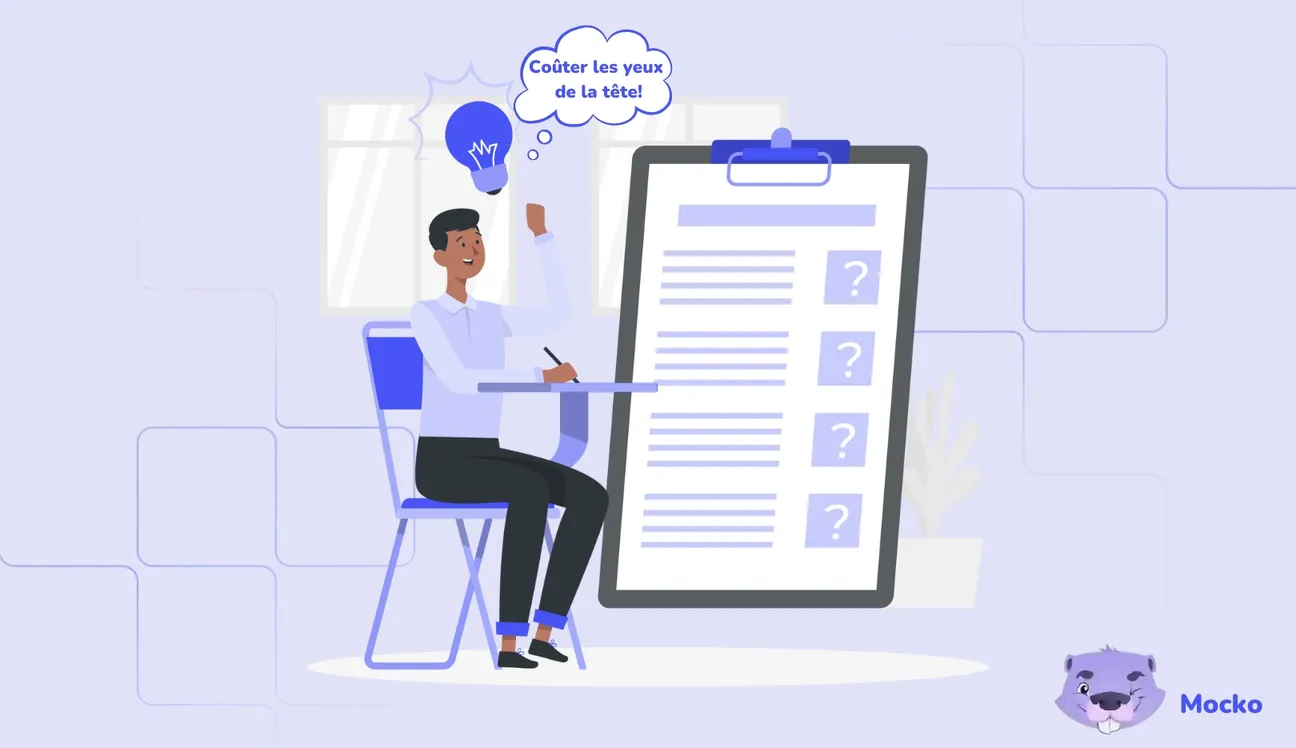
- Coûter les yeux de la tête
Literal: To cost the eyes from the head
Meaning: To be extremely expensive
Example: Cette robe coûte les yeux de la tête !
- Avoir la tête dans les nuages
Literal: To have one’s head in the clouds
Meaning: To be a dreamer, absent‑minded
Example: Arrête d’avoir la tête dans les nuages et concentre‑toi !
- Tomber dans les pommes
Literal: To fall into the apples
Meaning: To faint
Example: Il a fait si chaud qu’elle est tombée dans les pommes.
- Avoir un coup de foudre
Literal: To have a lightning strike
Meaning: To fall in love at first sight
Example: Quand je l’ai vue, j’ai eu le coup de foudre.
- Faire la grasse matinée
Literal: To do the fat morning
Meaning: To sleep in, have a lie‑in
Example: Le dimanche, j’adore faire la grasse matinée.
- Avoir le cafard
Literal: To have the cockroach
Meaning: To feel down, blue
Example: Depuis qu’il est parti, j’ai le cafard.
- Poser un lapin à quelqu’un
Literal: To put a rabbit on someone
Meaning: To stand someone up
Example: Il m’a posé un lapin hier soir, je suis furieuse !
- Avoir une mémoire d’éléphant
Literal: To have an elephant’s memory
Meaning: To have an excellent memory
Example: Elle a une mémoire d’éléphant, elle n’oublie jamais rien.
- Appeler un chat un chat
Literal: To call a cat a cat
Meaning: To speak frankly, call a spade a spade
Example: Ici on appelle un chat un chat : ton travail n’est pas assez bon.
- Il pleut des cordes
Literal: It’s raining ropes
Meaning: It’s raining heavily
Example: Il pleut des cordes, prends un parapluie !
- Avoir d’autres chats à fouetter
Literal: To have other cats to whip
Meaning: To have more important things to do
Example: Je ne peux pas t’aider maintenant, j’ai d’autres chats à fouetter.
- Faire d’une pierre deux coups
Literal: To hit two targets with one stone
Meaning: To kill two birds with one stone
Example: En allant au supermarché, je passe à la poste : je fais d’une pierre deux coups.
- Être dans la lune
Literal: To be on the moon
Meaning: To be daydreaming
Example: Tu es encore dans la lune ou tu m’écoutes ?
- Donner sa langue au chat
Literal: To give one’s tongue to the cat
Meaning: To give up (guessing)
Example: Je donne ma langue au chat, c’est qui ?
- Avoir le bras long
Literal: To have a long arm
Meaning: To have influence/connections
Example: Pour obtenir ce poste, il faut avoir le bras long.
- Mettre la charrue avant les bœufs
Literal: To put the plow before the oxen
Meaning: To put the cart before the horse
Example: Tu achètes déjà les meubles ? Tu mets la charrue avant les bœufs !
- Avoir la patate / la pêche
Literal: To have the potato / the peach
Meaning: To be full of energy
Example: Ce matin j’ai la pêche, je vais tout finir !
- Casser les pieds à quelqu’un
Literal: To break someone’s feet
Meaning: To annoy/bother someone
Example: Arrête de me casser les pieds avec tes questions !
- Tenir la route
Literal: To hold the road
Meaning: To make sense, to hold up (idea, excuse)
Example: Ton excuse ne tient pas la route, avoue la vérité.
Bonus Idioms Often Heard in TEF Listening & Reading
- Il y a anguille sous roche → Something fishy is going on
- Avoir un poil dans la main → To be very lazy
- Marcher sur des œufs → To walk on eggshells
- Avoir les chevilles qui enflent → To get a big head / become arrogant
- Faire mouche → To hit the bull’s eye / be spot on
- Prendre ses jambes à son cou → To run away as fast as possible
- Raconter des salades → To tell tall tales / lies
- Être au bout du rouleau → To be exhausted, at the end of one’s rope
Wrapping Up
As the last words, remember that idioms can elevate your score from B2 to C1. However, to use them effectively, try to use them in your oral answers, as idioms sound more natural when spoken.
Using idioms naturally in a letter or essay can be helpful too. So try to memorize at least 10-15 core idioms for your test day.
FAQs
Here are some frequently asked questions about this topic:
Focus on 10–15 core idioms that appear frequently. Quality matters more than memorizing dozens, and examiners reward natural usage over forced repetition.