Erasmus+ in French-Speaking Countries: The Ultimate 2026 Guide
Table of Contents2 sections
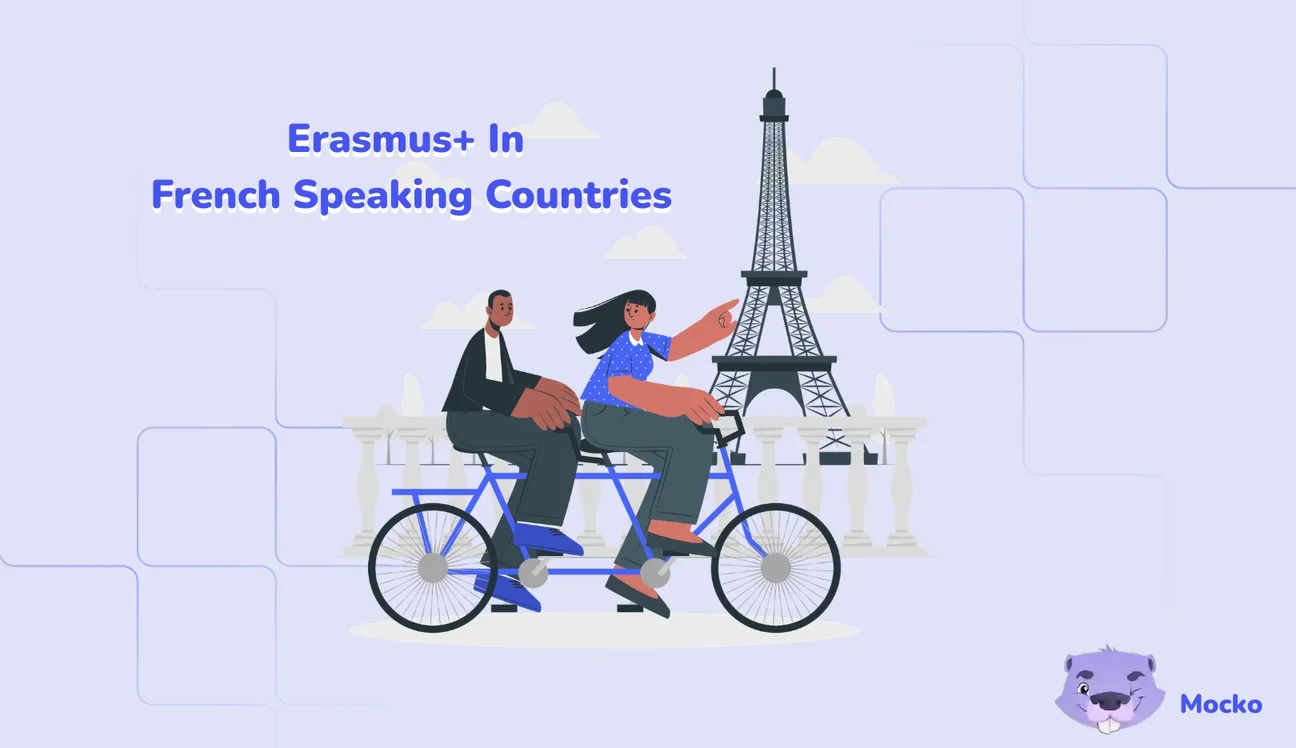
Erasmus+ opens doors to life-changing experiences across Europe, primarily France, Belgium (especially Wallonia and Brussels), and Luxembourg.
In 2024 alone, over 109,000 people chose France for Erasmus+ mobility, while more than 43,000 headed to Belgium and 3,500 to Luxembourg.
The programme supports higher education students, vocational learners, apprentices, and staff with grants covering travel and living costs.
You can study for 2–12 months (or short blended mobilities), complete traineeships, or join youth projects, all while improving your French and building international networks.
This guide covers everything: eligibility, application steps, funding details, top cities, practical preparation tips, and unique opportunities in these countries.
Updated for the 2026 programme priorities (inclusion, sustainability, and digital skills), it draws from official EU sources and national agencies to help you plan confidently. Let’s take a look:
What Is Erasmus+ and Why Choose French-Speaking Countries?
Erasmus+ is the European Union’s programme for education, training, youth, and sport (2021–2027). It funds mobility and cooperation projects so participants gain skills, cultural understanding, and employability.
In French-speaking countries, you benefit from high-quality teaching (many programmes in French or English), affordable student life outside major capitals, and easy travel across Europe.
France stands out for its historic universities, such as the Sorbonne or Toulouse. Belgium’s French-speaking regions offer dynamic cities like Liège and Brussels (bilingual hub).
Luxembourg provides a compact, multilingual environment ideal for international careers. All three deliver full Erasmus+ activities, no restrictions.
Participating French-Speaking Countries and Top Destinations
Several French‑speaking countries offer full Erasmus+ activities with no major restrictions. Here’s a closer look at the most popular destinations and what they offer.
1. France
France remains the top choice for Erasmus+ students thanks to its mix of culture, academic reputation, and regional diversity.
Popular cities include:
- Paris – cultural capital, top universities, global networks
- Lyon – food scene, student‑friendly, access to the Alps
- Toulouse – aerospace hub, warm climate
- Marseille – Mediterranean lifestyle, multicultural environment
- Strasbourg – European institutions, lower living costs
- Bordeaux, Lille, Nice, Montpellier – vibrant student cities with strong academic programs
Notable universities:
Université Paris 1 Panthéon‑Sorbonne, Université de Bordeaux, Université d’Aix‑Marseille, among many others.
2. Belgium (French‑speaking regions: Wallonia & Brussels)
Belgium is a strong option for students interested in business, engineering, political science, and international relations.
Popular cities:
- Brussels – bilingual, home to EU institutions
- Liège – lively student atmosphere
- Namur – calm, historic, administrative center
- Mons – affordable and student‑friendly
French‑speaking students often benefit from free or low‑cost language classes through networks like POLEKE.
3. Luxembourg
Luxembourg offers a compact, multilingual environment where French is widely used in daily life, administration, and workplaces.
It’s especially appealing for students in finance, law, economics, and EU studies, with the University of Luxembourg providing strong programs and a close‑knit academic setting. The smaller scale makes integration easier and day‑to‑day life more manageable.
How to Apply for Erasmus+ in These Countries (Step-by-Step)
To apply for the Erasmus+ program in these French-speaking countries, follow these steps:
- Contact your home university’s Erasmus coordinator or international office, only participating institutions can send you.
- Check partner universities in France, Belgium, or Luxembourg via your institution’s list.
- Prepare documents: academic transcript, motivation letter, CV, proof of enrolment, and language certificate (B1–B2 French or English often needed).
- Sign a Learning Agreement to ensure credits transfer back home.
- Submit your application by your home institution’s deadline (usually October–February for the following year).
- If selected, the host university confirms your place.
Non-EU students may need a visa; EU/EEA citizens use their ID card. Always start 6–9 months early.
Erasmus+ Funding and Grants for 2026
Erasmus+ provides a monthly grant to help cover living and travel costs during your stay abroad. The exact amount depends on your home institution and the cost group of your destination, and countries like France, Belgium, and Luxembourg are often placed in the higher‑cost categories.
For 2026, typical funding ranges are:
- €300–€600 per month for study mobility
- Slightly higher amounts for traineeships, since internships usually involve more expenses
Additional Top‑Ups
You may also qualify for extra financial support, including:
- Green travel top‑up for choosing low‑emission transport (train, bus, carpooling)
- Inclusion support for participants with fewer opportunities or specific needs
One major advantage: you remain exempt from tuition fees at the host university.
After arriving in France, many students also apply for national benefits such as APL/CAF housing assistance, which can significantly reduce monthly rent.
Funding is processed through your home institution, and once you’re selected for Erasmus+, the grant is issued automatically. Many students also choose to combine their grant with part‑time work, in France, international students can work up to 964 hours per year.
Preparing for Your Stay: Practical Tips
For having a none stressful stay, here are some tips you should consider:
1. Accommodation
Start your housing search early, especially if you’re considering CROUS residences in France, which typically cost €150–€450 per month and are accessible through Lokaviz.
If you prefer private rentals or shared coliving, platforms like Studapart, Le Bon Coin, and Appartager offer a wide range of options (€400–€750).
Belgium and Luxembourg follow similar patterns, with a mix of university housing and private rentals. Wherever you go, opening a local bank account and securing a guarantor, such as Visale in France, will make the application process much smoother.
2. Health and Insurance
If you’re an EU student, bring your European Health Insurance Card (EHIC) to access medical care. Non‑EU students should arrange private insurance before arrival.
Once in France, register with French Social Security to receive reimbursements for medical expenses.
3. Language and Integration
Take advantage of Erasmus+ OLS for free online French courses. Most universities also offer Buddy Programmes and ESN (Erasmus Student Network) activities, which are great for meeting people. Daily interactions, language tandems, local markets, or even carpooling via BlaBlaCar, help you pick up practical French quickly.
Even if your courses are in English, basic French makes everyday life much easier.
4. Budgeting and Daily Life
Expect monthly living costs of €1,000–1,500 in Paris and €700–1,200 in regional cities. Budget for food (university cafeterias and markets are affordable), transport (student passes), and leisure (many museums and cultural sites offer student discounts).
Get a local SIM card such as Lebara or B&YOU, and set up your transport card as soon as you arrive.
5. Travel and Exploration
Travel within France and across Europe is easy and affordable. Use SNCF youth cards for 30% off train fares, or opt for FlixBus and BlaBlaCar for budget travel.
Make time to explore festivals, football matches, regional food events, and cultural outings, they’re some of the most memorable parts of the experience.
Extra Tips for Success (Including Fresh 2026 Advice)
- Choose blended mobility (short physical + virtual) for flexibility.
- Prioritise green travel for the top-up and lower carbon footprint.
- Document your experience for future CVs, employers love the adaptability.
- Join alumni networks post-mobility for job leads.
- For French immersion: select French-taught courses even if English options exist.
- New for 2026: Focus on digital skills projects or inclusion initiatives, mention these in your motivation letter to strengthen your application.
- Use apps like International Student Hub or Rome2Rio for planning.
- Prepare a printed file with all documents, admin goes faster.
Do not miss: Validate your Learning Agreement early, pay any CVEC fee in France, and attend Welcome Weeks for quick friendships.
Conclusion
Erasmus+ in French-speaking countries delivers more than credits—it builds confidence, language skills, lifelong friends, and a global mindset. With generous funding, supportive networks, and unforgettable cities, these destinations stand out for personal and professional growth. Check deadlines with your institution, contact national agencies (Agence Erasmus+ France in Bordeaux for education matters, or equivalent in Belgium/Luxembourg), and take the leap. Your future self will thank you. Bon voyage et bonne chance!
FAQs
Begin 2–3 months ahead. Apply for CROUS or private housing immediately after acceptance; EU citizens need only an ID card, while others check visa rules early.